



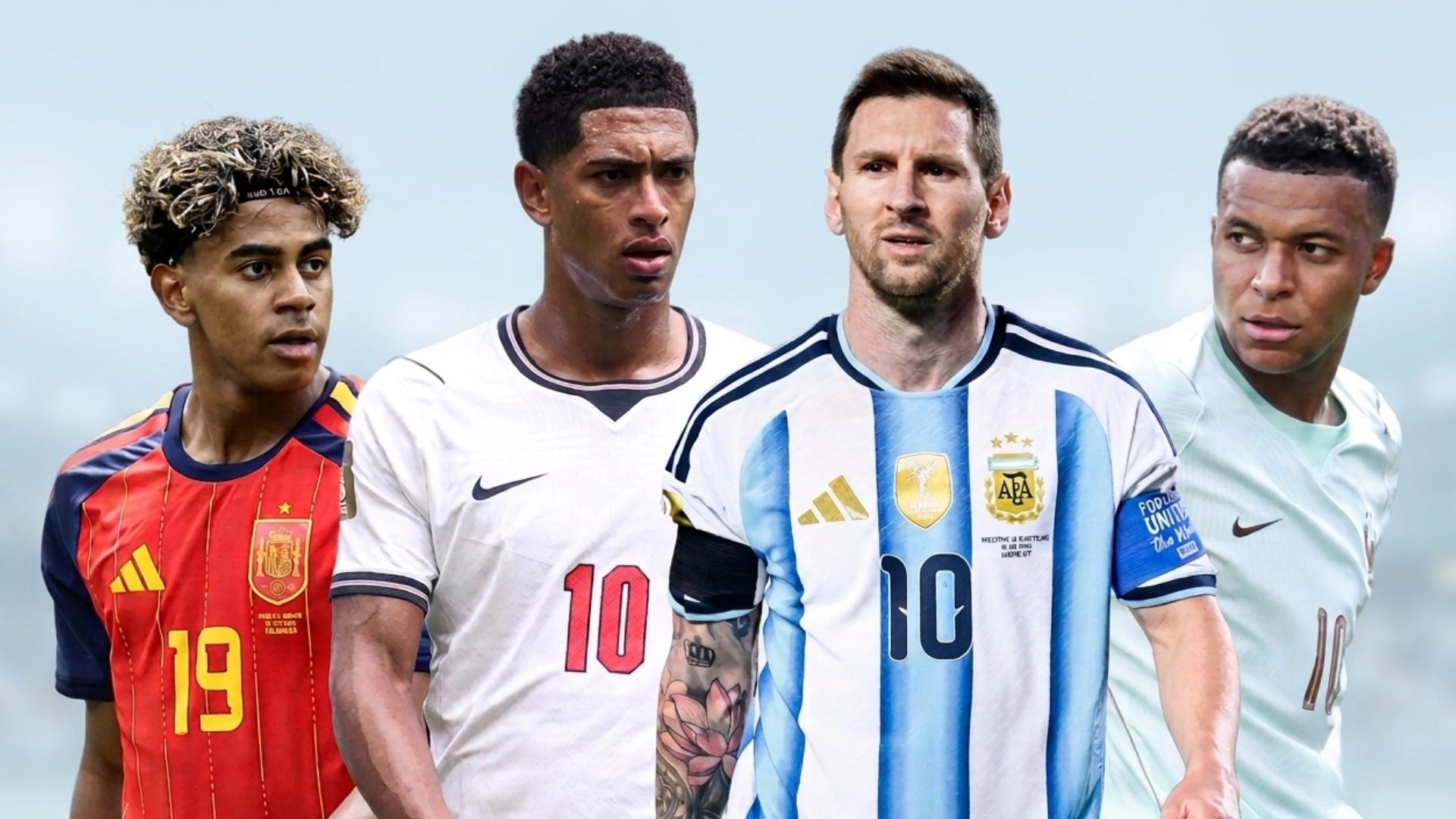
The World Cup just did something it has never done. For the first time in the tournament’s modern history, the four best teams on the planet all made the semifinals. France, Spain, England, and Argentina. No Cinderella, no fluke, no Cape Verde crashing the party. And it happened in the first 48-team edition, which added an extra knockout round, meaning one more night for chaos to take a favorite down, and it still could not. The bracket collapsed into pure blue blood.
What makes it sing is that the two semifinals are opposite genres. France versus Spain in Dallas on Tuesday is the art film, a tactical chess match between the two most sophisticated teams left. France has the most frightening attack in the sport, Kylian Mbappé has eight goals in six games, and Les Bleus have not conceded in three straight matches. Spain has allowed a single goal in the entire tournament and brings players off the bench who would start for almost anyone else. England versus Argentina in Atlanta on Wednesday is the opposite: a grudge match soaked in 40 years of history, chaos-ball on both sides, the kind of fixture that comes with its own war crimes tribunal. England survived Norway 2-1 on a Jude Bellingham masterclass. Argentina got past Switzerland with Messi having a quiet night. And here is the wild part. In 20 years at the summit of the game, Lionel Messi has never once played England. That happens for the first time Wednesday, with Maradona’s Hand of God still sitting unforgiven four decades later. As Argentina’s coach put it, reaching this stage is “a privileged space in football.”
Now the business story riding underneath it. This tournament is the event that turned prediction markets into a genuine threat to the betting apps like DraftKings and FanDuel. In June the platforms cleared roughly $44.8 billion in combined volume, with Kalshi alone above $31 billion, a jump of more than 70% in a single month, and Polymarket setting a record at $10.8 billion. The World Cup Winner market by itself has traded around $3.9 billion, the largest sports market these venues have ever run. And the category math tells the real story. Sports now makes up about 85% of Kalshi’s lifetime volume, and on Polymarket, the platform built for politics, sports hit 56.5% of June volume and overtook both politics and crypto for the first time. Pew pegs sports at 80% of all Kalshi trading and 39% of Polymarket since mid-2024. Kalshi and Polymarket grabbed 78.5% of all betting-app downloads in June, up from a combined 6% a year earlier, while DraftKings and FanDuel shed between 36% and 41% of their users in the same window. Sports did not visit the prediction markets. It moved in and took the master bedroom. To the board.
TRADE 1: France vs. Spain, Semifinal
Tuesday, Dallas. The purist’s dream and the hardest game on the board to price. France enters as the tournament favorite on the strength of Mbappé’s eight goals and a defense that has gone three matches without conceding, the rare team firing at both ends. Spain counters with the best defensive record in the field, a single goal allowed across the whole tournament, and a bench so deep it functions as a second national team. This is the match the World Cup Winner market has been building toward, and it is essentially a coin flip dressed as a chess match. The value read: France is priced as the favorite to win the whole thing, which means the semifinal line undersells Spain, a side that has made conceding look impossible. When the market falls in love with an attack, the team that refuses to break is usually where the edge hides.
TRADE 2: England vs. Argentina, Semifinal
Wednesday, Atlanta. Forget the xG models, this one runs on 40 years of grievance. England and Argentina is soccer’s most combustible rivalry, equal parts football and unfinished history, and both teams have bludgeoned their way here rather than glided. England needed a Bellingham rescue act to see off Norway. Argentina leaned on everyone but a subdued Messi to dispatch Switzerland. The market’s problem is that neither side has looked convincing while both keep winning, which is the exact profile that breaks prediction models. The subplot worth the position: Messi, in his farewell tournament, faces England for the first time in his career, in a semifinal, on the 40th anniversary window of the goal English fans still have not forgiven. If you believe in narrative, the market is not pricing enough of it.
TRADE 3: World Cup Golden Boot Winner
The individual race has a new leader and it is the same man dragging France toward the final. Mbappé now sits on eight goals through six games, and with Les Bleus favored to go the distance, he has both the form and the fixtures to chase the first repeat Golden Boot in the award’s history, a feat no man has ever pulled off. Messi, tied with him for much of the tournament, went quiet against Switzerland and now needs Argentina to keep winning just to keep pace. The market has spent this World Cup as a two-man duel between the departing king and his heir, and the heir just pulled ahead on the same night the king went silent. History says this award loves a surprise. This year it looks like it wants a coronation.
About The Spread Sheet
Your comedic entry into what is trending on prediction markets. Hosted by Noah Gardenswartz. Each week Noah and a guest take the questions the markets are actually pricing, across sports, pop culture, power and tech, and call them. We explain them. We make fun of them. Then we give the verdict: YES or NO.
Follow
Web: spreadsheetshow.com
X: x.com/spreadsheetshow
Instagram: instagram.com/spreadsheetshow
TikTok: tiktok.com/@spreadsheetshow
YouTube: youtube.com/@spreadsheetshow
Disclosures
Not financial advice. Prediction markets discussed for entertainment and editorial purposes. Trade at your own risk and verify all odds independently.