



College football kicks off Saturday, five days from now, and this offseason delivered the single strangest story the sport has ever produced. Dae’Quan Wright, a tight end who went undrafted out of Ole Miss, signed with the Eagles, got claimed off waivers by the Browns, and was dressed for a pre-season NFL game on Saturday. Then a Louisiana judge granted him and fifteen other players a restraining order over the NCAA’s eligibility rules, the Browns waived him, and he now has an agreement in place to play for LSU this season. A man who was catching passes in an NFL practice facility for weeks is about to suit up in the SEC. Nobody, anywhere, has ever done this before. College football’s lawyers created the transfer portal to fix one mess and accidentally built a door that swings both directions.
That is the NIL era in one sentence: the sport that spent a century pretending amateurism was sacred now has a legitimate pipeline running from NFL practice squads back into college locker rooms, because the money and the eligibility rules finally collided hard enough to break something. Revenue sharing, name-image-likeness deals, a transfer portal that resets rosters twice a year, and now apparently a return lane from the pros. Coaches are recruiting players other coaches thought they had locked up for four years, athletic directors are running something closer to front offices than deans’ offices, and a kid can now go from Virginia Tech to Ole Miss to an NFL camp to LSU without ever running out of eligibility. The chaos is the game now. To the board.
TRADE 1: NCAA Football: 2027 National Champion
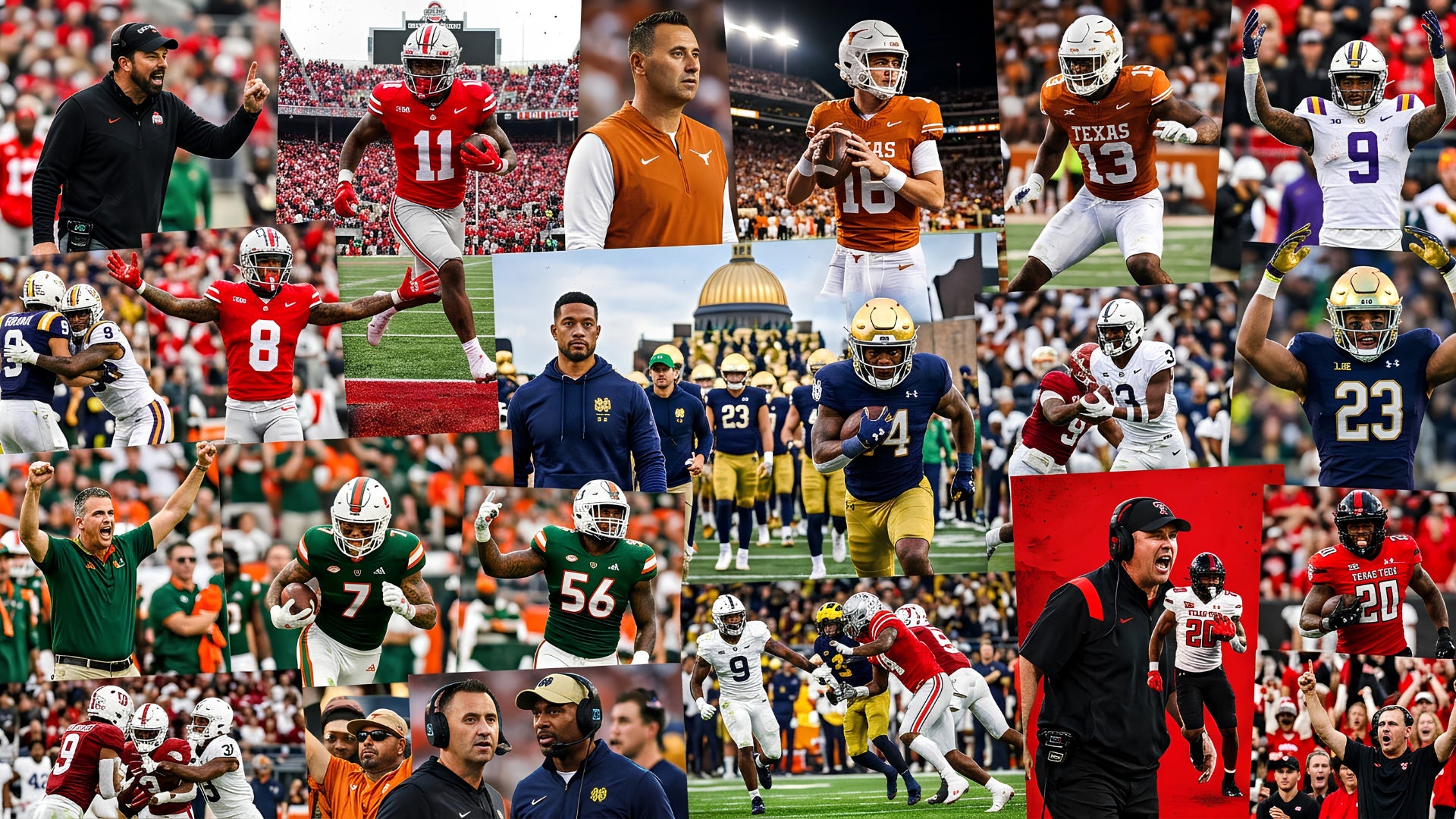
Notre Dame lead the market at 14%, with Ohio State, Texas, and Oregon all bunched tightly behind them, and no team clearing much past the mid-teens. That flatness is the entire lesson of the portal era rendered as a probability chart. Ohio State, Notre Dame, and Oregon top the field on the strength of experienced quarterbacks, rebuilt defensive lines assembled through the portal, and strong offensive line recruiting, while Texas, Georgia, and Indiana lean on conference depth and roster continuity to stay in the mix. Nobody separates from the pack because nobody’s roster is fixed anymore. A team can lose its best receiver in January and replace him with somebody else’s best receiver by February, which means the preseason favorite and the actual best team in November are frequently two different programs. Last year’s champion, Indiana, opened the season a punchline and won it anyway. The market has learned that lesson. It just has not figured out what to do with it yet.
TRADE 2: College Football Coaches Out Before September
Kalshi runs a live market on which coaches lose their jobs before the season even kicks off, and the headline name has been fading fast. Bill Belichick, the eight-time Super Bowl champion who bombed his way to a 4-8 debut at North Carolina, sits at just 2% to be out by September 1, down from as high as 12% earlier this summer. That collapse tells you everything about how the portal era actually protects coaches now. Belichick brought in the 17th-ranked recruiting class in the country and the third-best in the ACC for 2026, which is exactly the kind of instant reload the old system never allowed. A 4-8 season used to be a firing offense. Now it is a rebuilding year, because a coach with money and a working relationship with the portal can restock an entire roster in one offseason instead of waiting on four recruiting classes to mature. The market has fully priced that shift. A coach who would have been gone by Christmas a decade ago is sitting at 98% to make it to Week 1, because the fastest way back to relevance in this sport is no longer patience. It is the transfer portal.
TRADE 3: Heisman Trophy Winner 2026
The individual race is its own monument to the portal era. This season’s leading Heisman contenders are drawn from a class of quarterbacks who have already changed schools at least once, some of them twice, chasing better offenses, bigger NIL packages, or simply a clearer shot at a starting job. A trophy that used to reward the best player on the best team increasingly rewards the best player who made the smartest business decision in December. That is not a criticism. It is just what the award has become. The market treats it the same way it treats the national championship market: flat, competitive, and utterly uninterested in loyalty to any one program, because in 2026, loyalty to one program is no longer really how this sport works.
That’s the bell. LSU picked up a tight end who was on an NFL field over the weekend, the national title race has no real favorite, and the season kicks off Saturday with North Carolina and TCU in Dublin, Ireland, of all places. Have a great week. Five days to kickoff, and the portal never actually closes anymore.
About The Spread Sheet
Your comedic entry into what is trending on prediction markets. Hosted by Noah Gardenswartz. Each week Noah and a guest take the questions the markets are actually pricing, across sports, pop culture, power and tech, and call them. We explain them. We make fun of them. Then we give the verdict: YES or NO.
Follow
Web: spreadsheetshow.com
X: x.com/spreadsheetshow
Instagram: instagram.com/spreadsheetshow
TikTok: tiktok.com/@spreadsheetshow
YouTube: youtube.com/@spreadsheetshow
Disclosures
Not financial advice. Prediction markets discussed for entertainment and editorial purposes. Trade at your own risk and verify all odds independently.